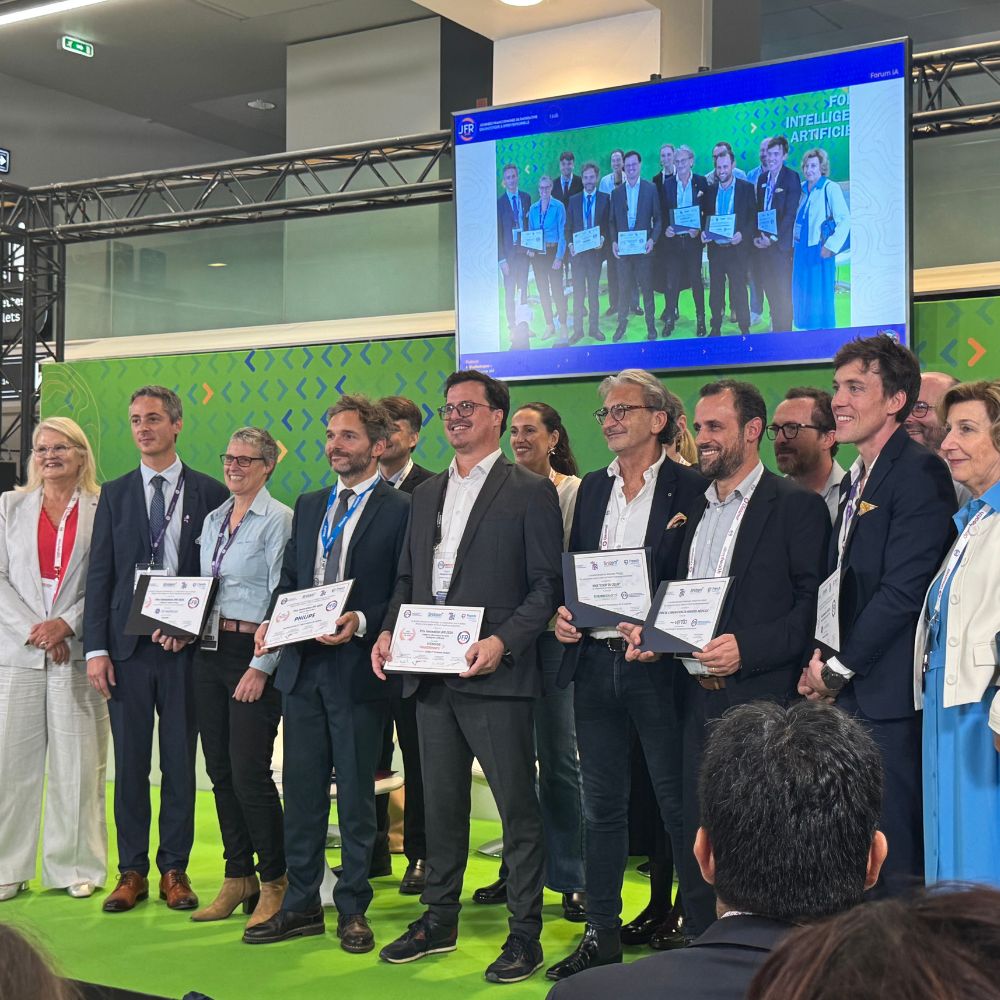
JFR Recap: An Event Rich in Discussions and Opportunities for Ventio!
At this year’s Journées francophones de radiologie (JFR), which focused on the relationship between healthcare professionals and patients, Ventio presented its BriSE [Breakthrough in Susceptibility Enhancement] technology as part of the Start-up Innovation Award.
Developed to make the measurement of cerebral iron accessible to all radiologists, this MRI technology enables the precise localization of iron in the brain and quantifies its progression. This is a significant advancement, as iron plays a role in numerous physiological and pathological processes and serves as a marker associated with neurodegeneration.
By integrating magnetic susceptibility measurement into standard MRI acquisition sequences, BriSE opens up new possibilities for improving the diagnosis and monitoring of conditions such as Alzheimer’s and Parkinson’s diseases, as well as multiple sclerosis.
Honored for the second time with the Start-up Innovation Award, Ventio confirms the relevance of its approach and the radiology community’s interest in this innovation. This recognition underscores the potential of solutions designed to integrate into clinical practice and make a tangible contribution to the patient care pathway.
Four Days of Discussions and New Perspectives
For the team, the outcome of these four days was also very positive, with several concrete advances:
Meetings with key players in the French radiology field, manufacturers, and imaging software providers, paving the way for new collaborations.
A preview presentation of new images illustrating various clinical scenarios. Obtained using MRI systems from different manufacturers and at multiple magnetic field strengths, these images demonstrate the technology’s ability to be standardized across a variety of imaging environments.
New opportunities for collaboration, with meetings scheduled in the coming weeks, invitations to present our results, and proposals for evaluation in new routine clinical settings.
These JFR sessions allowed us to compare our approach with real-world expectations, share the advancements in our technology, and identify new opportunities to continue its development for the benefit of medical imaging and patients.